“The combination of biotechnology and AI will help us make major advances.”

A natural alternative to antibiotics: Biologist Beatrix Förster is developing antibodies derived from cow’s milk at Doderm, her Koblenz-based biotech startup. The award-winning company has been researching innovations for humans and animals since 2020.
What innovations are you currently working on at your company?
Answer
Doderm is built on a technological platform for deriving natural antibodies from excess cow’s milk. Our innovative process aims to extract not only antibodies from the milk, but also other valuable ingredients until only water is left. In addition, we’re continuously working on innovative products to harness our antibodies for building up the microbiome on the skin, in the mouth, and in the gut of humans and animals.
What do you think makes Rhineland-Palatinate particularly appealing as a location for innovation and doing business?
Answer
As a research company that is already marketing products, it is very important for Doderm to be close to highly regarded universities as well as higher education institutions with a practical focus. In Rhineland-Palatinate, we also benefit from exchange with SME-spirited companies across all industries. Not to mention, our biggest investors are located here, too.
What do you think will be important developments in your field in the next few years and how might these affect Rhineland-Palatinate’s economy and growth?
Answer
Looking to the future, the broad range of applications for biotechnology will be utilized even more intensively and will be able to offer solutions for things such as feeding the world and sustainability. The combination of biotechnology and artificial intelligence will help us to make major advances in this regard. Rhineland-Palatinate has a broad footing as a biotech hub and can take on a leading role here.
What’s your favorite thing to do after work in Rhineland-Palatinate?
Answer
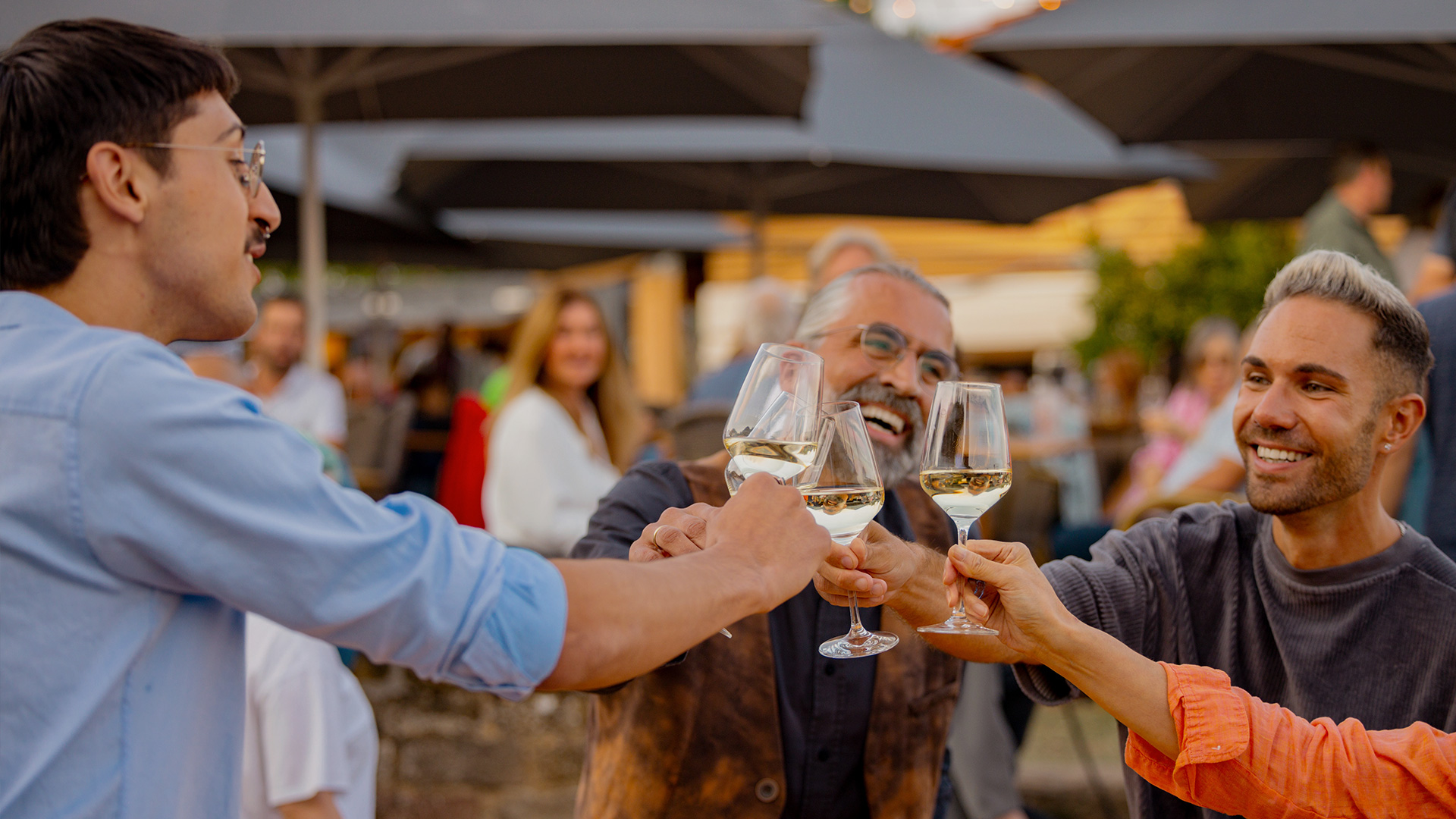
I love good food and I love enjoying life, so I quite like ending the day in good company over a nice meal and a glass of wine from a nearby vineyard.
“There are some 4,500 researchers driving innovation forward in this state where everything you need is close by.”

One would be hard pressed to find someone who knows the Rhineland-Palatinate founder scene better than Dirk Schmitt does. The CEO of Life Science Zentrum Mainz brings together people from around the biotech industry to create lasting innovation.
What innovations are you currently working on at your company?
Answer
At Life Science Zentrum Mainz, we’re working on two innovative projects: the [LiSci]RLP incubator and the BioVation RLP business unit. The [LiSci]RLP incubator supports startups in the life sciences and biotechnology fields by providing intensive guidance and a strong network. BioVation RLP is a networking platform for biotechnology and life sciences in Rhineland-Palatinate which supports innovative projects. Both initiatives receive funding from the Rhineland-Palatinate Ministry of Economic Affairs, Transport, Agriculture and Viniculture. Together, they drive life science innovation forward and create a strong network for future developments.
What do you think makes Rhineland-Palatinate particularly appealing as a location for innovation and doing business?
Answer
Rhineland-Palatinate is a standout location for business and academia as it boasts both excellent research institutions and global corporations such as BASF, Boehringer Ingelheim, and BioNTech as well as a vast number of innovative small- and medium-sized enterprises. The region offers a strong research landscape with over 4,500 scientists who are taking innovation forward and actively promoting knowledge transfer between the research and the private sectors. Life Science Zentrum Mainz has been supporting founders since 1987 and offers a founder-friendly environment. At this geographically well-positioned location, Rhineland-Palatinate is strengthening its innovation strategy in a targeted way by expanding R&D infrastructure and promoting networks. In our state everything you need is close by, so we offer a high quality of life and a great family–work balance, and that makes us attractive to skilled workers.
What do you think will be important developments in your field in the next few years and how might these affect Rhineland-Palatinate’s economy and growth?
Answer
Using artificial intelligence (AI) to analyze large volumes of data and develop personalized medicine will boost the efficiency and precision of research. That in turn will result in faster innovation cycles and improved products, which will help grow the Rhineland-Palatinate economy. Advances in genomics will allow for treatments that are tailored to individual genetic profiles and unlock new business opportunities. Sustainable biotechnology will develop environmentally friendly processes to address global challenges such as climate change and which create new markets. The links between research institutions and businesses strengthen the innovation ecosystem and the region’s competitiveness.

What’s your favorite thing to do after work in Rhineland-Palatinate?
Answer
There’s nothing nicer than enjoying the hours after work in Rhineland-Palatinate. Whether by the Rhine or in a cellar door bar in the vineyards, you can sit back and reflect on the day over a glass of Riesling and a helping of Spundekäs dip. Enjoy boisterous, laughter-filled conversations with friends while the sun fades away behind the hills. That’s the perfect ending to a day in Rhineland-Palatinate – full of pleasure and relaxation. As we say around here, “Do hogge die, die immer do hogge”. Or in regular German: “Da sitzen die, die immer da sitzen” and it means “Here sit those who always sit here.” Cheers!
“Rhineland-Palatinate has a stellar profile thanks to its infrastructure and highly skilled workers.”

Lilly, a pharmaceuticals company, has been developing medicines for the most harmful illnesses for 150 years. Alexander Horn, managing director of its German unit, explains why the corporation is investing 2.3 billion euros in a high-tech site in Rhineland-Palatinate.
What innovations are you currently working on at your company?
Answer
Our most important goal is to develop innovative treatments that make people’s lives easier all over the world and to make these treatments available. Throughout our nearly 150-year history, we have found options for treating some of the most difficult health issues: diabetes, cardiovascular disease, infectious disease, mental illness, cancer, and many more. We continue to work on this constantly.
What do you think makes Rhineland-Palatinate particularly appealing as a location for innovation and doing business?
Answer
We’re currently building a 2.3-billion-euro high-tech production site in the beautiful town of Alzey, and a variety of factors led us to choose this location. Firstly, the property had a size and development time that were highly attractive to us. Logistically, Alzey also has a very favorable location between our German headquarters in Bad Homburg and our production location near Strasbourg. Last but not least, Alzey – and Rhineland-Palatinate in general – impressed us with its outstanding infrastructure and many highly qualified workers in the surrounding region.

What do you think will be important developments in your field in the next few years and how might these affect Rhineland-Palatinate’s economy and growth?
Answer
In Alzey, we’re going to build a high-tech production site with up to 1,000 jobs by 2027. This will make us one of the largest employers in Alzey and its surroundings. Our site will have direct and indirect effects on the planning of housing, daycares, schools, vocational training facilities, and retail in the local region.
Furthermore, we are playing an active role in helping shape the Rhineland-Palatinate biotech cluster in cooperation with the state government and other businesses.
What’s your favorite thing to do after work in Rhineland-Palatinate?
Answer
Unfortunately, I don’t live locally, so I’m not regularly able to spend my after-work hours in Rhineland-Palatinate. However, when I get the opportunity to visit the state, I find the beautiful city of Mainz particularly attractive. And, luckily, you can always enjoy an excellent glass of Rhineland-Palatinate wine wherever you may be.
“Rhineland-Palatinate is a place of innovation creating tomorrow’s medicine.”

Dr. med. Michael Hopp chairs the Interdisciplinary Center for Clinical Trials (IZKS Mainz) at University Medical Center Mainz. He explains how Rhineland-Palatinate is already creating tomorrow’s medical and biotech innovation today.
What innovations are you currently working on at your company?
Answer
The Interdisciplinary Center for Clinical Trials (IZKS) and integrated Medical Device Innovation Center (MIC) do work to constantly optimize clinical research methods and procedures. Our goal is to guide the development and research into innovative medicines, medical products, and diagnostic processes. To achieve that, we apply innovative methods such as digital data collection tools and evaluation of AI-assisted analysis systems. On top of that, we focus on patient-centered and translational research, immuno-oncology medicines, and digital as well as conservative medical products and diagnostics.
What do you think makes Rhineland-Palatinate particularly appealing as a location for innovation and doing business?
Answer
For us, Rhineland-Palatinate is a location for doing business as well as a forward-looking location for creating innovation and the medicine of the future. Our state sets itself apart with its statewide links between cutting-edge research, medical centers, and enterprises, combined with proximity to the renowned Johannes Gutenberg University Mainz and cooperation with leading research institutions. Other notable institutions in this context include research-oriented ones like the Bundeswehr Central Hospital in Koblenz and the German Research Center for Artificial Intelligence (DFKI) in Kaiserslautern. The Rhineland-Palatinate state government makes a significant contribution to creating this extraordinary environment and thereby facilitating advances in medicine, with the Ministry of Economic Affairs, Transport, Agriculture and Viniculture providing continuous, targeted support for its development. This includes, among many other things, specific funding measures and initiatives such as establishing the Medical Device Innovation Center at the University Medical Center Mainz. The close cooperation and ties between politics, business, and scientific research create ideal conditions for ensuring cutting-edge medicine far beyond the state of the art.
What do you think will be important developments in your field in the next few years and how might these affect Rhineland-Palatinate’s economy and growth?
Answer
Medicines, medical products, and diagnostics are of fundamental importance, alongside therapeutic methods. What will be crucial for this over the next few years will be developing new products and procedures which incorporate key technologies such as biotechnology, artificial intelligence, biobanks, and translational approaches as well as leveraging the analysis of data from everyday clinical practice for research issues. To take the development of medical biotechnology further, it will be increasingly important to integrate pharmaceutical research with medical products research. Rhineland-Palatinate has an outstanding culture of knowledge excellence in both these fields and has the right infrastructure for carrying out the corresponding research developments. Rhineland-Palatinate offers optimal conditions for integrating research and translational approaches, from fundamentals research to the patient’s bedside; in addition to facilitating advances in medicine, this will also have positive effects on Rhineland-Palatinate as a location for healthcare and business.
What’s your favorite thing to do after work in Rhineland-Palatinate?
Answer
When the day is over, Rhineland-Palatinate offers a diverse mix of nature and culture and, alongside that, numerous local delights such as amazing wine and various regional dishes. Personally, I like to complement my restaurant or wine bar visit with a walk on the banks of the Rhine or among the bustling crowds surrounding the Mainz Cathedral. If I’m in the mood for complete and utter relaxation, then the vineyards and the vistas offered there are my ideal destination for a walk.
Weiterführende Informationen finden Sie hier:
Tourismus und Erlebnis
Investitionen
Make it in Rheinland-Pfalz
Digitaler Atlas der Weinkultur